
Be Kind
Don't be mean, keep it civil, avoid agressions:
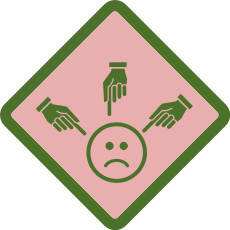 accusing -- Pointedly insisting something negative about someone, requiring them to put up a defense or appear guilty.
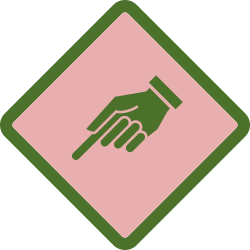 blaming -- Saying or implying that a person or group is the cause of a problem.
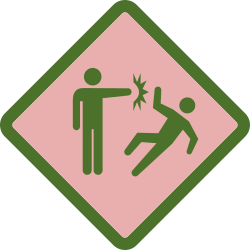 bullying -- Repeated use of any verbal or emotional hostility by someone in a position of apparent power, superiority, respect, or anonymity, including superior numbers.
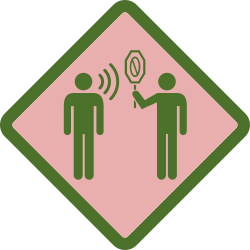 contradicting -- Immediately and bluntly countering the statements of another with direct opposites, especially when done repeatedly.
 controlling -- Using personal power to restrict or limit another's appropriate freedoms, including feedback, feelings, involvement, or movement.
 criticism, complaining, or venting -- Pointing out or implying personal/group faults or problems, especially in an aggressive manner.
 cussing -- Insistence on using words or phrases that are personally offensive to the other person, especially when directed at them.
 defensiveness -- Defending oneself when not actually being attacked, or without clarifying the other person's intent. Defensiveness creates a hostile (and emotionally exhausting) environment by implying that the other person is attacking or hostile when they may want to discuss issues with mutual respect and mutual purpose.
 discrimination, segregation, or excluding -- Denying access or benefits to an individual or group, including free association, without a compelling social interest to do so.
 doghousing or holding grudges -- Maintaining a negative attitude against someone because of past interactions instead of current behavior.
 expecting or demanding -- Assuming or requiring that others do, be, or feel what we want instead of respectfully asking.
 forcing your opinion or drivebyshooting -- Forcing your opinion on someone who is not ready to listen.
 fortune telling -- Assuming or predicting bad outcomes without leaving respectful room for the other party or situation to change.
 gossip or backstabbing -- Negative talking about someone behind their back, except when talking 1) with intent to resolve the problem AND 2) only with someone qualified to help resolve the problem.
 harassment -- Aggressive or sustained pressure or intimidation (of any kind) that creates a hostile environment.
 harshness -- Interacting or correcting with more forcefulness than needed for a situation.
 impatience or interrupting -- Not allowing others to compete their thoughts, words, or transformation on their own timeline, usually by cutting them off and taking control of the conversation or situation yourself.
 invalidating -- Ignoring or dismissing feelings, usually by failing to acknowledge them before raising our own concerns.
 labeling or name calling -- Assigning an offensive name or label to a person or group, like "jerk," "racist," "fascist," "control freak," "homophobe," "radical," or "mansplaining."
 loaded questions or innuendo -- Questions or statements with built-in assumptions, so that any response (or a failure to respond) appears guilty.
 manipulation -- Controlling someone's actions by evoking an emotional reaction, like guilt.
 maximizing or castrophizing -- Treating one (negative) instance as being a rule, often with "all" or "always" statements, or treating one small infraction as catastrophic.
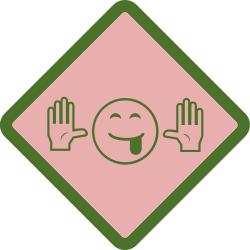 mocking or ridicule -- Contemptuous and dismissive language and behavior.
 needling or interrogating -- Repeatedly questioning, critiquing, or provoking someone.
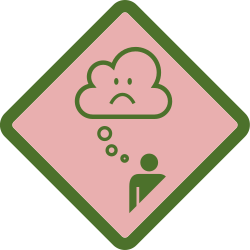 negative fixations: assuming negatives or "mind reading" falsely -- Guessing negatively about another's thoughts, motives, or intents and judging or holding them accountable for our guess.
 one-upping -- Repeatedly sharing our own achievements or stories after others have shared theirs.
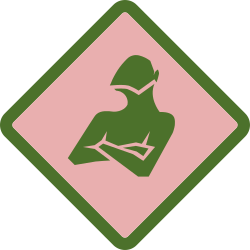 passive resistance or throwing in the towel -- Being passively aggressive by saying "whatever," foot-dragging, procrastinating, forgetting repeatedly, or quitting when something matters to the other person.
 patronizing, superiority, or correcting -- Approaching a conversation with an air of arrogance, or humoring or revising someone's opinions with an air of assumed superiority.
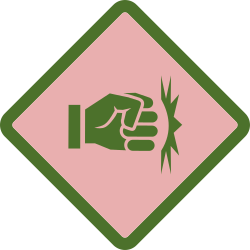 retaliation -- Responding by attacking on a separate topic, even if related, rather than addressing the matter currently under discussion.
 rudeness -- Offensive ill manners that show willful lack of personal respect for others.
 sarcasm -- Saying the opposite of what you think or feel as an implied emphasis or criticism.
 shaming -- Publicly humiliating someone for believing, doing, or being something, or appealing to perceived public outrage to change someone's behavior or belief.
slander, distortion or misrepresenation -- Statements about someone or their beliefs that contain elements of truth but which misrepresent or mislead, whether or not it is intentional.
 steamrolling or filibustering -- Continuing to barrage someone with arguments or explanations without giving them an opportunity to respond.
 stereotyping, prejudice or -isms -- Pre-judging or assuming things about someone or their opinions because of unrelated characteristics or affiliations like skin color, gender, religion, or place of origin.
 stonewalling or ignoring -- Refusing to talk, listen, or resolve something indefinitely without setting boundaries or timeframes for continuing. Includes passive actions that prevent discussion or resolution.
 suspicion -- Mistrusting another's motives, especially in spite of evidence they may offer.
 threatening -- Promising or implying negative consequences or retaliation.
 trailing barb or backhanded compliment -- Making a verbal or emotional attack look innocent because it begins with or looks like a compliment.
 trivializing -- Minimizing, understating, discounting, or dismissing efforts or ideas, implying that they are of little value.
 unequal boundaries or double standards -- Special rules for one party only, or unequal application of limits or rules, which creates an unequal arena for living or discussion without a compelling reason.
 withholding or deprivation -- Denying the other party feedback, forgiveness, approval, recognition, or anything else they have a reasonable right to enjoy.
 yelling -- Raising your voice to add emotional impact to your words.
